

Plants & Flowers
Published
August 7, 2026
Author
The Searles Gardening Team
Before you plant your winter crops, the condition of your soil makes all the difference. Resetting your garden beds at the end of each growing season is one of the most impactful things you can do for long-term productivity, and it does not need to be complicated. Searles Gardening has everything you need to give your beds a proper reset, from the ground up.
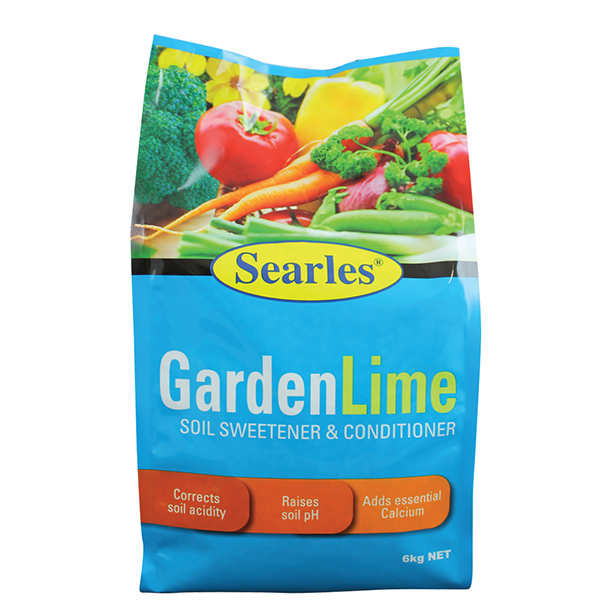
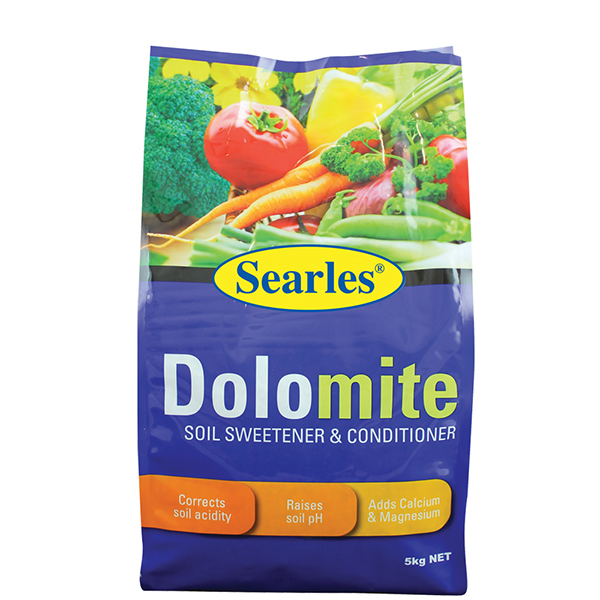
Both products exist to do the same basic job: correct acidic soil and raise soil pH, which is why they're often grouped together under the name soil sweeteners. Both are also mixed into the soil before planting rather than used as a standard fertiliser. Where they part ways is in their mineral makeup, and that difference matters more than it might seem.
Soil pH isn't just a technical number, it directly affects how well your plants can access the nutrients already in the ground. Most garden plants, including vegetables, flowers and fruiting plants, grow best in soil that's slightly acidic to neutral, generally sitting between pH 6 and 7. When soil drifts too far into acidic territory, plants can struggle to take up nutrients properly even when those nutrients are abundant in the soil, which is exactly the problem garden lime and dolomite are designed to fix.
This is where the two products genuinely differ. According to Searles' own product information, Garden Lime raises soil pH and adds essential calcium, which helps strengthen plant cell walls. Dolomite does the same job of correcting acidity and raising pH, but it also adds magnesium alongside the calcium. That extra mineral matters if your soil is running low on magnesium specifically, since a magnesium deficiency shows up as bronze-yellow discolouration along the margins of older, lower leaves, and Searles notes this can occur when gardeners add lime rather than dolomite in soils that need both minerals. If your soil only needs a calcium boost and a pH lift, Garden Lime will do the job. If it needs magnesium as well, Dolomite is the better choice.
Not every plant wants sweeter soil. Some of our best-loved garden plants, including camellias, azaleas and rhododendrons, are acid-loving species that flourish in a low pH and will suffer if lime or dolomite is applied around their roots. Most Australian native plants also prefer slightly acidic soil, so Garden Lime and Dolomite are generally not recommended. Instead, use a complete nutrient fertiliser, such as Searles Native Food, to support healthy growth. For these plants, skip the soil sweeteners altogether and reach for a purpose-built acidic mix instead, such as the Searles Azalea, Camellia and Gardenia Specialty Mix, which is pH balanced specifically for acid-loving plants and includes chelated iron to keep them flourishing.
Cooler months are a great window to get this job done, because correcting soil pH takes time to settle in before plants shift into active spring growth. Applying lime or dolomite now, ahead of your spring planting, gives the minerals time to work through the soil profile so your beds are in good shape when growth ramps back up. For more on getting your garden ready during the cooler months, our guide on prepping your garden for winter covers the other essential seasonal jobs worth tackling at the same time.
Before reaching for either product, it's worth checking your soil pH first with a simple test kit. This tells you not just whether your soil is acidic, but roughly how far it has drifted from that ideal 6 to 7 range, which helps you judge how much correction it actually needs. Bronze-yellow discolouration along the margins of older, lower leaves indicates your garden needs a magnesium boost alongside calcium, pointing you towards dolomite. If these symptoms aren't present and only calcium correction is needed, garden lime is the better choice.
Garden Lime and Dolomite both earn their place in the shed as reliable soil sweeteners, but they're not one and the same. Choosing between them comes down to what your soil is actually missing: calcium alone, or calcium and magnesium together. Test your soil, steer clear of acid-loving plants and Australian Natives, and apply your chosen product over winter to give it time to work before spring. No matter where you are in Australia, you'll find the Searles range at your local garden centre; check our Where to Buy page to find your closest stockist.
Both raise soil pH and correct acidity, but Garden Lime adds calcium only, while Dolomite adds both calcium and magnesium.
Most garden plants grow best between pH 6 and 7. Below this range, plants can struggle to take up nutrients even when they're present in the soil.
No. Acid-loving plants such as camellias, azaleas, rhododendrons and Australian Natives should not be treated with lime or dolomite, as they need acidic soil to flourish.
Winter is ideal, as it gives the soil correction time to settle in before plants move into active spring growth.
Test your soil pH and consider whether it's likely low in magnesium as well as calcium; if so, Dolomite is the better option, otherwise Garden Lime will correct acidity effectively.
Found this article helpful?
Find where to buy these recommended Searles products near you!
.png)