

Veggie Gardens

Published
July 22, 2026
Author
The Searles Gardening Team
Summer in Australia pushes gardens to their limits. High temperatures, intense UV, and unpredictable rainfall patterns create challenges that even established plants struggle with when left unattended. The good news is that with the right approach, your garden can absolutely flourish through the hottest months of the year. Searles Gardening has been helping Australian gardeners get more from their outdoor spaces for decades, and summer is where smart preparation really pays off.
Australia's summer climate varies dramatically from region to region. Tropical areas in the north experience monsoon conditions with high humidity and heavy rainfall. Temperate coastal regions like Sydney and Melbourne face extended dry periods punctuated by intense heat waves. Inland and arid areas regularly record extreme temperatures that push soil conditions to extremes.
Regardless of where you are in Australia, the common thread is that summer demands more from your garden than any other season. Plants that perform beautifully through autumn and spring can wilt, burn, or fail entirely if summer care is not adjusted accordingly. This is where strong gardening essentials become critical for maintaining plant health, soil balance, and water efficiency during extreme conditions.
According to the Bureau of Meteorology's seasonal climate summary for Australia, Australian summers are trending hotter and drier across most of the country, making water-smart and heat-resilient gardening practices increasingly important for home gardeners everywhere.
The most common summer watering mistake is watering little and often. Frequent shallow watering encourages roots to stay near the soil surface where they are most exposed to heat. Deep, infrequent watering, applying enough water to penetrate 20 to 30 cm into the soil, trains roots to grow downward where conditions are cooler and more stable.
Searles water maximisation products, including soil wetting agents and water-retaining soil additives, are specifically designed to help moisture penetrate and stay in the soil longer, reducing how often you need to water even in dry conditions.
If there is one summer gardening practice that delivers more value per effort than any other, it is mulching. A layer of quality organic mulch applied around your plants does several things simultaneously that make a material difference to summer performance:
Apply mulch to a depth of 5 to 10 cm around plants, keeping it clear of direct contact with stems and trunks to prevent collar rot. Replenish as needed through the season as it breaks down and compresses.
Searles composts and soil improvers serve double duty in summer, applied as a mulch layer, they protect the soil, and worked in before planting they improve the moisture retention and nutrient capacity of your growing medium. Searles composts and soil improvers are the right product for your garden beds and containers.
Mulch is one of the best tools in your summer gardening kit for keeping Australian plants healthy through the heat.
Summer fertilising requires more care than the rest of the year. Plants under heat stress are not actively growing at the same rate as they would in spring, and applying high-nitrogen fertilisers to stressed plants can cause tip burn, leaf scorch, and root damage.
The general principle for summer feeding is less is more. If plants are actively growing and showing no signs of stress, a light application of a balanced slow-release fertiliser every six to eight weeks is appropriate. To avoid further stressing plants, water thoroughly before applying fertiliser, especially during periods of heat or dry weather. If plants are clearly under stress, wilting, bleaching, or dropping leaves, hold off on feeding until conditions improve and the plant has recovered.
For flowering and fruiting plants in summer, a potassium-rich fertiliser helps with heat tolerance, fruit quality, and disease resistance. Searles speciality fertilisers for flowering plants and fruiting trees are formulated for this exact application.
Summer is prime season for a wide range of garden pests and fungal diseases. Warm temperatures accelerate insect breeding cycles, meaning pest populations can move from manageable to damaging very quickly. Humidity in subtropical and coastal regions creates ideal conditions for powdery mildew, black spot, and other fungal infections.
The key is early detection. Inspect plants weekly rather than waiting until damage is visible from a distance. Catching an aphid infestation at 20 insects is manageable. Catching it at 2,000 requires significantly more intervention.
Searles pest and disease control products cover the full range of summer challenges, from contact insecticides for immediate knockdown to systemic treatments for persistent problems.
Lawns take a beating in Australian summers. Heat stress, dry spells, and heavy foot traffic can quickly turn a lush lawn into a patchy, stressed one, and recovery takes longer than prevention.
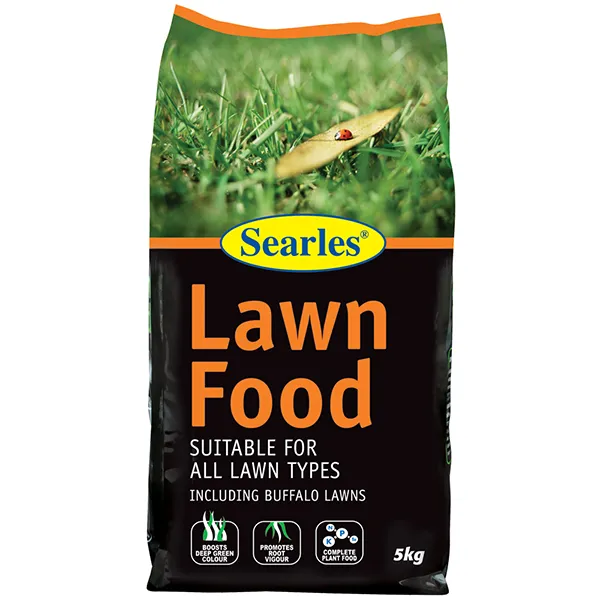
For ongoing lawn health support through summer, Searles lawn care products include both fertilisers and soil treatments designed to support turf through heat and dry conditions.
The work you do on your soil before the hottest months arrive pays dividends all season. Well-structured soil with high organic matter content retains moisture longer, maintains cooler root zone temperatures, and supports the microbial life that makes nutrients available to plants.
If your soil is compacted, sandy, or low in organic matter, addressing it in late spring, before summer temperatures set in, is significantly more effective than trying to improve it mid-season. Incorporate quality compost, aged manure, and soil conditioners into planting beds before the summer planting season begins.
Adding organic matter to sandy or clay soils makes a real difference to how well they hold water, which matters most when dry periods stretch on.
Some plants are simply better suited to Australian summer conditions than others. Choosing varieties that naturally tolerate heat, dry spells, and high UV levels reduces the amount of maintenance required and improves the visual result through the season.
With the right products and the right approach, your garden can absolutely flourish through even the most demanding Australian summer. From water maximisation solutions and quality mulching products to targeted pest control and specialty fertilisers, Searles has everything you need to keep your garden performing at its best. To find where to buy Searles products near you, visit your nearest stockist today.
Water deeply two to three times per week rather than daily. Deep, infrequent watering builds stronger root systems that handle summer heat more effectively.
Organic mulches such as sugar cane, lucerne, and wood chip work well. Apply 5 to 10 cm deep around plants to reduce soil temperature and moisture loss.
No. Hold off on fertilising during extreme heat or when plants are visibly stressed. Resume feeding once conditions moderate and plants recover.
Raise mowing height, water deeply and infrequently, leave clippings on the lawn, and avoid fertilising during heat waves to preserve lawn health.
Aphids, caterpillars, mites, whitefly, and scale insects are the most frequent summer pests, along with fungal diseases like powdery mildew in humid conditions.
It is possible but less effective than preparing soil in spring before heat sets in. Add compost and organic matter to garden beds at the edges during summer.
Found this article helpful?
Find where to buy these recommended Searles products near you!